


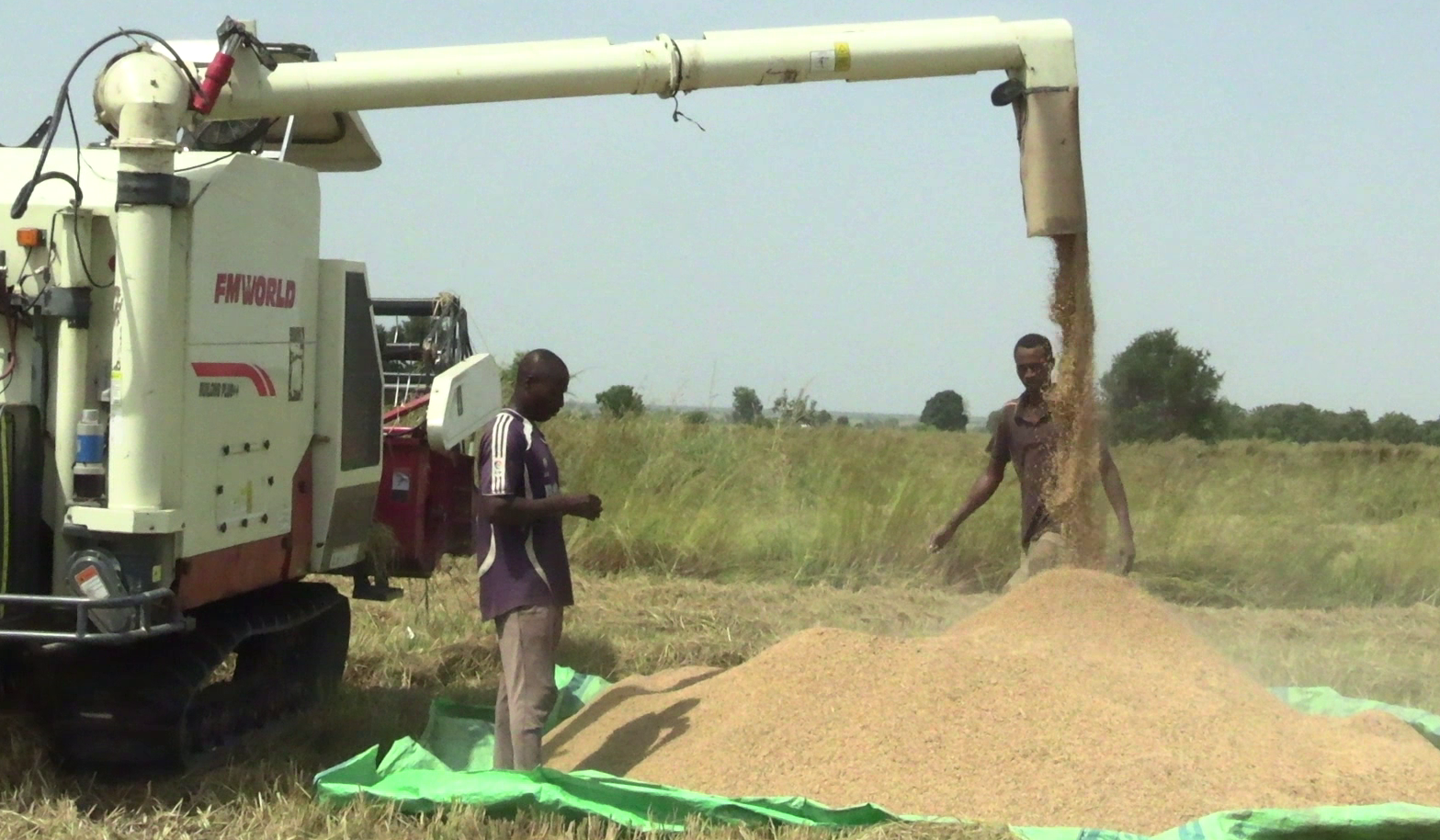
The Competitive African Rice Platform (CARP-Ghana), a branch of the ECOWAS Rice Observatory based in Abuja, has urged the government through the Ministry of Food and Agriculture to take deliberate and urgent measures to address the persistent challenges confronting rice farmers across the country.
Speaking to the media in Tamale during the platform’s General Assembly meeting, the National Chairman of CARP-Ghana, Mr Yaw Adu Poku, expressed concern over the lack of market access for local rice farmers, especially during the harvesting season.
According to him, the market price of rice has dropped by about 50 percent, yet farmers have not benefited from the decline, as prices at the farm gate remain unchanged since 2024 making local producers uncompetitive.

Mr. Adu Poku further revealed that over 500 acres of rice farms have been destroyed by migratory birds moving in large swarms, compounding the farmers’ woes as they face the onset of the harmattan season.
“Rice farmers and millers are in a dilemma, while distributors are unconcerned because they continue to sell imported rice,” he lamented. “The only way to rescue Ghana’s rice farmers is through direct government intervention to stabilize and support the sector.”
He cited examples from countries such as Vietnam, Thailand, Malaysia, and India, where governments play key roles in achieving rice self-sufficiency through targeted interventions in seed production, farm preparation, processing, and financing.
Mr. Adu Poku criticized local banks for being “happy to finance rice imports” but unwilling to extend credit to local farmers. “This has turned Ghana into a country of importers,” he said, adding that CARP-Ghana is currently restraining its members from staging a protest as they await action from the relatively new government.
He also alleged that most imported rice sold in Ghana is over a year old, leading to poor texture and nutritional quality, and argued that foreign governments deliberately offload such expired stocks onto African markets.
The Vice Chairperson of CARP-Ghana, Ama Opong Duah, highlighted that with new rice varieties being introduced through the Alliance for Green Revolution in Africa (AGRA), the perception that Ghanaian rice is of inferior quality is outdated.
“Ghana rice is fresh, aromatic, and of better quality than imported brands,” she stated, calling for a change in consumer attitudes toward locally produced rice.
While commending the government for initiatives such as the Feed Ghana and 24-Hour Economy programs, she appealed for increased support in land development, mechanization, and funding for millers to enable them to purchase paddy rice directly from farmers.
Country Lead of AGRA, Dr. Betty Annan, reaffirmed AGRA’s commitment to supporting rice production in Ghana. She noted that AGRA has invested significantly in the development and release of climate-smart, high-yielding, and resilient rice varieties to enhance productivity and ensure food security.
“The meeting provides an opportunity for stakeholders to reflect on progress, renew partnerships, and strengthen collaboration on national and regional priorities in the rice sector,” Dr. Annan said.
Technical Advisor at GIZ, Mr Issah Nadjo, reiterated GIZ’s commitment to supporting rice self-sufficiency efforts across Africa. He noted that GIZ is currently assisting Nigeria and Burkina Faso, while AGRA leads the Ghana chapter, providing technical and financial support to promote private sector participation in the rice value chain.
National Coordinator of CARP-Ghana, Mr Mohammed Habib Abdulai, explained that the platform’s mandate includes giving voice to rice stakeholders and facilitating policy coordination to reduce rice importation.
He disclosed that Ghana currently produces just over 50 percent of its rice demand, leaving the country only halfway toward self-sufficiency.
“The current import regime does not favor local farmers,” he stressed, calling for urgent government action to protect and empower domestic producers.
Northern Regional Minister, Ali Adolf John in a statement assured farmers of government’s readiness to collaborate with all stakeholders to translate ideas into tangible outcomes.
The minister encouraged rice farmers to develop a concept paper for submission to the President, emphasizing that the rice sector has the potential to transform Ghana’s economy, create jobs, and reduce dependence on imports.
He acknowledged ongoing challenges such as market access, climate change, and technological but reaffirmed government’s commitment to addressing them.
