


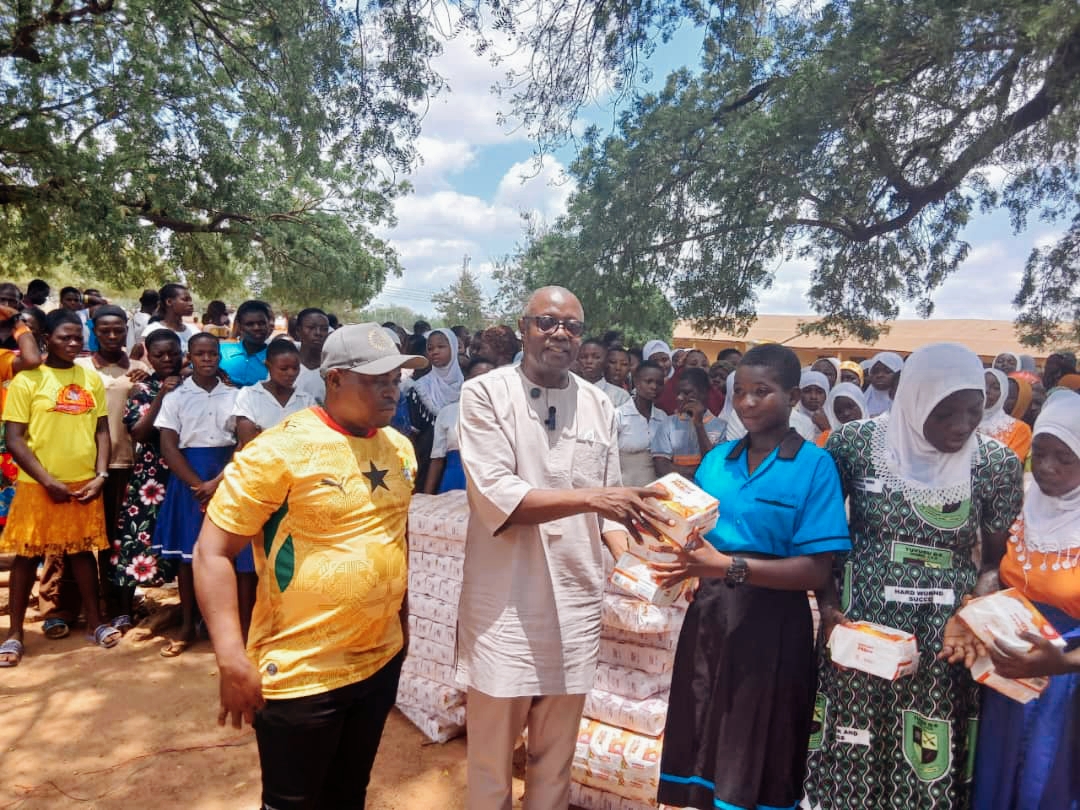
Zabzugu, Northern Region — In a quiet but deeply impactful intervention, relief and renewed confidence lit up the faces of hundreds of schoolgirls across the Zabzugu District as over 6,000 sanitary pads were distributed to junior high schools under the government’s Free Sanitary Pads Programme.
The initiative, led by the Member of Parliament (MP) for the area, Alhassan Umar, in collaboration with the District Chief Executive (DCE), George Lakoba Tanei, is aimed at addressing a persistent yet often overlooked barrier to girls’ education — menstrual hygiene management.
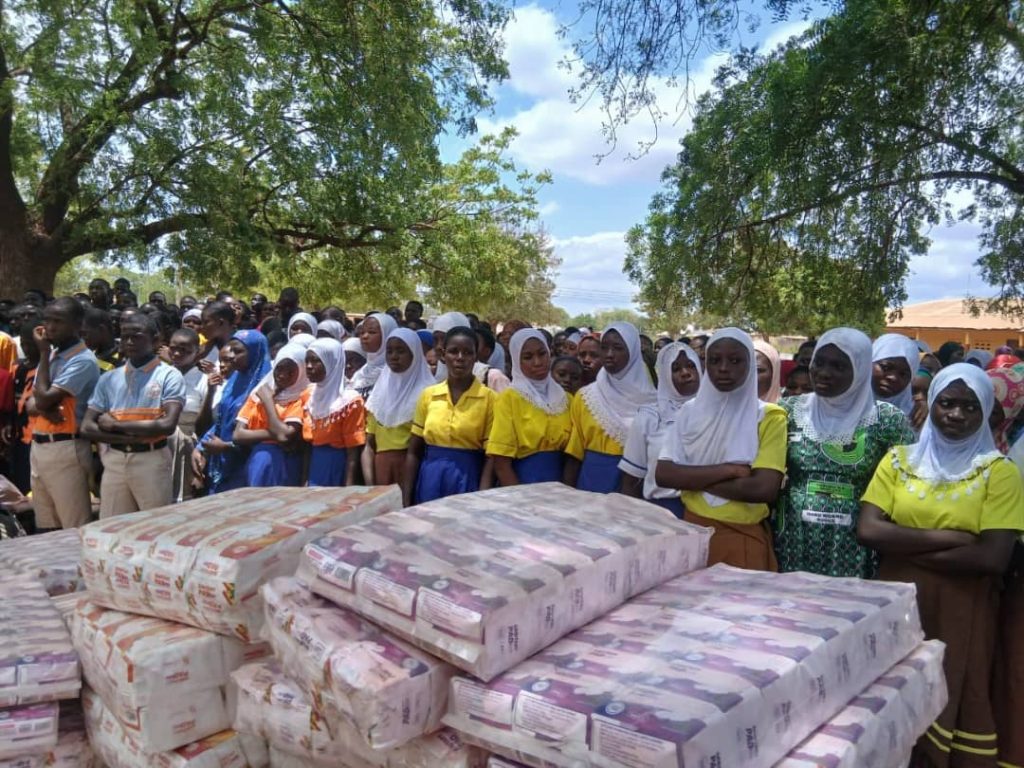
For many of the beneficiaries, the gesture goes beyond the provision of sanitary products. It represents dignity, inclusion and the assurance that their education will no longer be interrupted by circumstances beyond their control.
At brief ceremonies held in selected schools, the MP described the programme as a timely and practical response to a challenge that has, for years, contributed to absenteeism among adolescent girls.
“Menstruation should not be a reason for any girl to miss school or lose confidence in the classroom,” Alhassan Umar said. “This initiative is about restoring dignity, promoting confidence and ensuring that every girl has the opportunity to learn without interruption.”
The distribution, which covered all junior high schools in the district, forms part of a broader national policy drive to promote inclusive and equitable access to education. Education authorities in the area say the intervention is expected to significantly reduce the number of school days lost each month, while improving participation and academic performance among female students.
For parents, particularly those in rural communities, the programme also brings economic relief. The cost of sanitary products, though often overlooked, remains a burden for many households. By absorbing this cost, the initiative helps families redirect limited resources to other essential needs.
The DCE, George Lakoba Tanei, reaffirmed the district’s commitment to prioritising girl-child education, noting that sustainable development must be anchored on inclusive policies that respond to real community needs.
“Good governance thrives on responsive leadership,” he stated. “This intervention demonstrates our resolve to support our girls to stay in school, remain confident and achieve their full potential.”
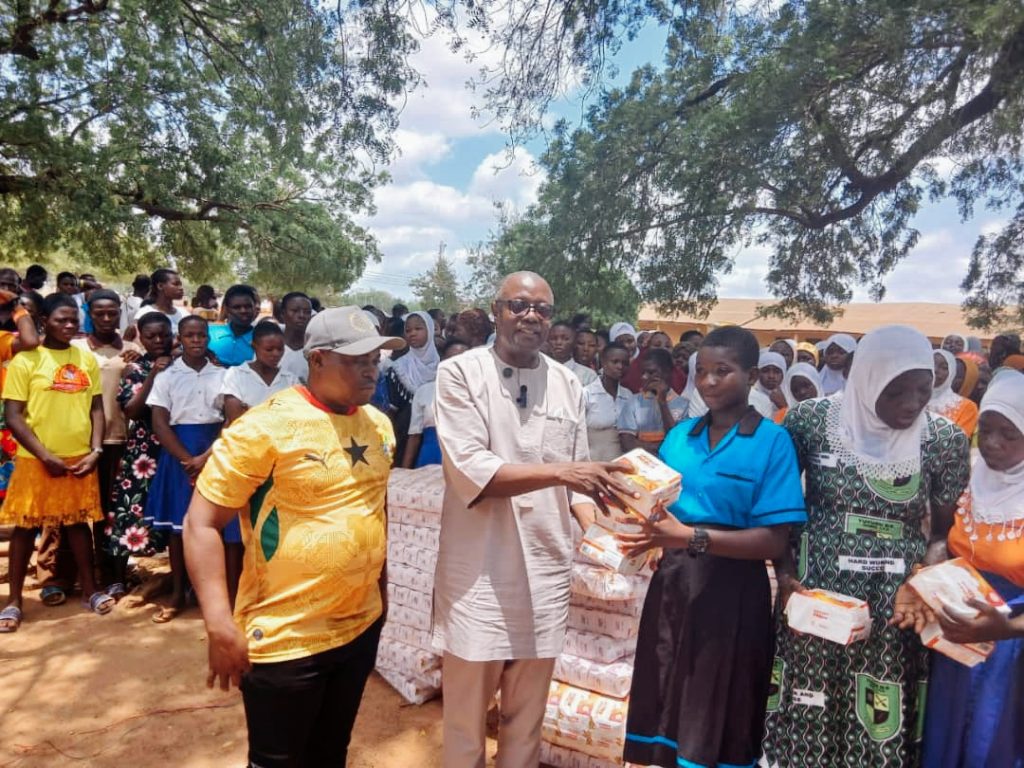
Community leaders and education stakeholders who witnessed the exercise described it as both timely and transformative, urging for its continuity and expansion.
The Free Sanitary Pads Programme is one of several social interventions aimed at promoting gender equality and improving educational outcomes nationwide. In Zabzugu, however, its impact is already being felt in more personal terms — in the confidence of a girl who can now sit through her lessons without anxiety, and in the quiet determination of a community investing in the future of its young women.
As the exercise draws to a close, it leaves behind more than supplies; it leaves a message — that education, in its truest sense, must be accessible, dignified and inclusive for all.
