

Sagnarigu Girls’ Model School Students Petition Government for Water, Sanitation and Hygiene Facilities

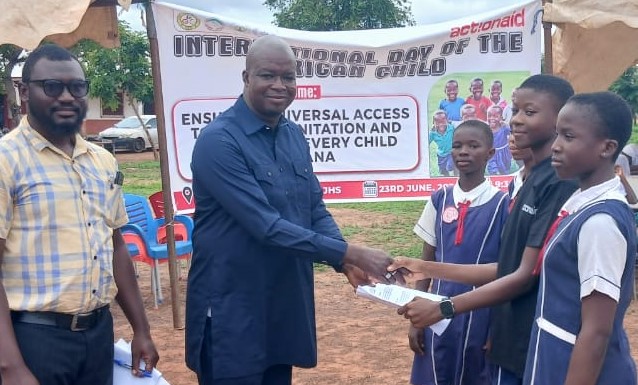
Students of Sagnarigu Girls’ Model Junior High School have appealed to the government and the Sagnarigu Municipal Assembly to urgently provide water, sanitation and hygiene (WASH) facilities to improve learning conditions and safeguard their health.
The students made the appeal through a petition presented during the celebration of the 2026 International Day of the African Child, organized by ActionAid Ghana under the theme, “Ensuring Universal Access to Water, Sanitation and Hygiene for Every Child in Africa.”
According to the students, inadequate access to potable water, insufficient waste disposal facilities and the absence of a perimeter wall continue to negatively affect hygiene practices, health and academic performance in the school.
The petition, read by the Senior Prefect, Angela Kudjo Asuo, indicated that the school, with a population of about 200 students, relies largely on water supplied by the Parent-Teacher Association (PTA). However, the supply is often delivered only once per academic term and is insufficient to meet the daily water needs of students and staff.
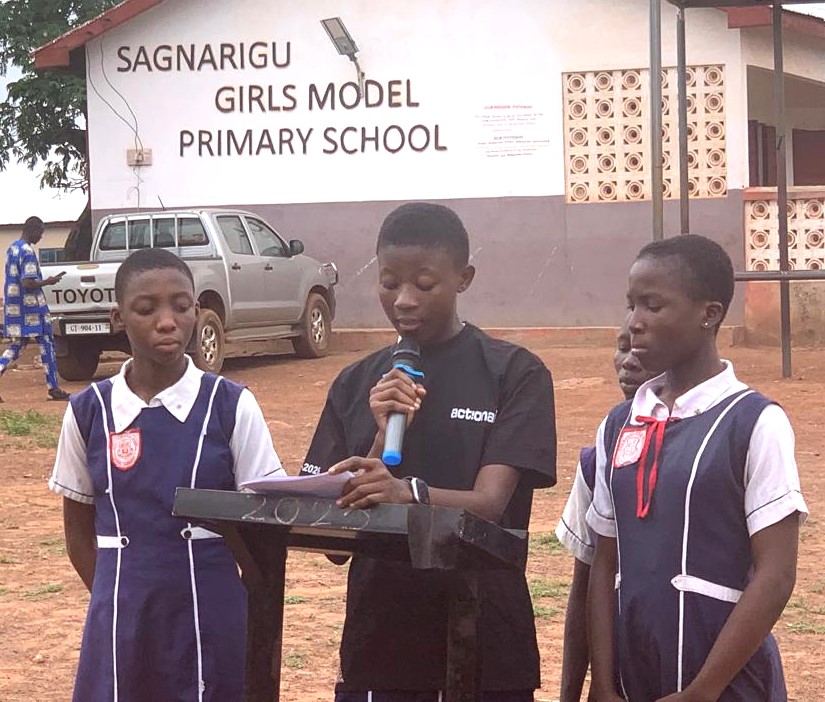
The students noted that the lack of a reliable water source has resulted in poor sanitation conditions, making it difficult to maintain hygienic toilet facilities and practice regular handwashing.
“Without water, toilets cannot be properly cleaned and handwashing becomes impossible, exposing students to health risks,” the petition stated.
The students further emphasized that inadequate water supply particularly affects adolescent girls, making menstrual hygiene management difficult and contributing to absenteeism from school.
“For adolescent girls, the inability to manage menstrual hygiene with privacy and cleanliness leads to discomfort, health risks and increased absenteeism. The lack of water directly undermines both our wellbeing and academic progress,” the petition noted.
The students also expressed concern over the shortage of covered waste bins across the school compound, which has contributed to widespread littering and poor environmental sanitation.
They described as unsafe and undignified the practice of requiring female students to collect refuse with their bare hand.
Requests to Government
The students appealed to the government and the Sagnarigu Municipal Assembly to provide the school with a mechanized borehole to ensure a reliable year-round supply of potable water.
They also requested the installation of a poly tank or underground water storage facility to harvest and store rainwater and borehole water for continuous access.
According to the petition, improved water supply would facilitate proper toilet maintenance, support regular handwashing and ensure dignified menstrual hygiene management for female students.
The students further called for the provision of durable covered waste bins at strategic locations within the school to improve waste management and eliminate the need for manual handling of refuse.
Another key request was the completion of the school’s perimeter wall. The students said an incomplete fence wall allows unauthorized access to the school compound, particularly at night, leading to open defecation and environmental contamination.
“Completing the perimeter wall will secure the school premises, prevent open defecation within the compound and help reduce the spread of sanitation-related diseases,” the petition stated.
The students expressed confidence that the Municipal Chief Executive and his administration would respond positively to their concerns.
“We place our trust in the Municipal Chief Executive and his team to give this petition the urgent attention it merits. Your intervention will significantly improve our learning conditions and affirm that the dignity and education of girls in Sagnarigu are worthy of investment,” the petition concluded.
Headmistress of Sagnarigu Girls’ Model School, Stella Tonka, endorsed the students’ appeal, describing water, sanitation and hygiene challenges as major issues affecting teaching and learning in schools.
She encouraged students to serve as ambassadors of good hygiene practices both in school and within their communities.
Madam Tonka also expressed gratitude to ActionAid Ghana for selecting the school to host the celebration, stressing that access to clean water, proper sanitation and good hygiene is essential for the health, dignity, education and overall wellbeing of every child.
The Day of the African Child is commemorated annually on June 16 to honour the bravery of school children in Soweto, South Africa, who protested against segregation and poor treatment of Black learners in 1976.
The observance was instituted in 1991 by the Assembly of Heads of State and Government of the former Organization of African Unity (OAU), now the African Union (AU), to promote the rights and welfare of children across the continent.
As part of the celebration, students performed a drama stressing the dangers associated with poor sanitation and the importance of adhering to public health guidelines to prevent disease outbreaks.
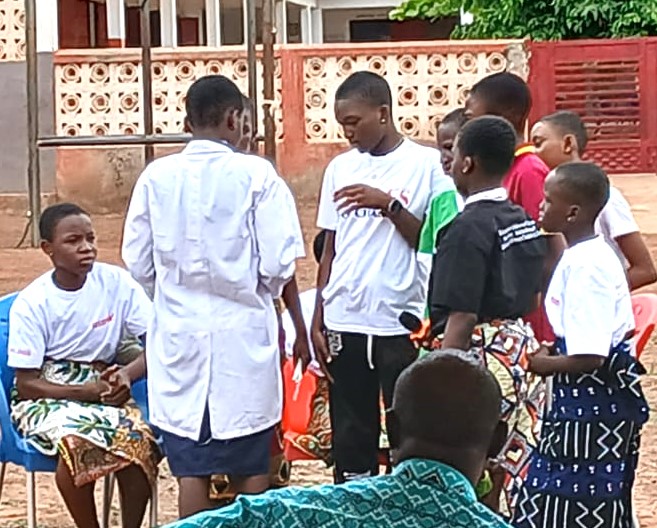
The event served as a platform for renewed calls for increased investment in water, sanitation and hygiene facilities to ensure a healthier and more conducive learning environment for children.
