


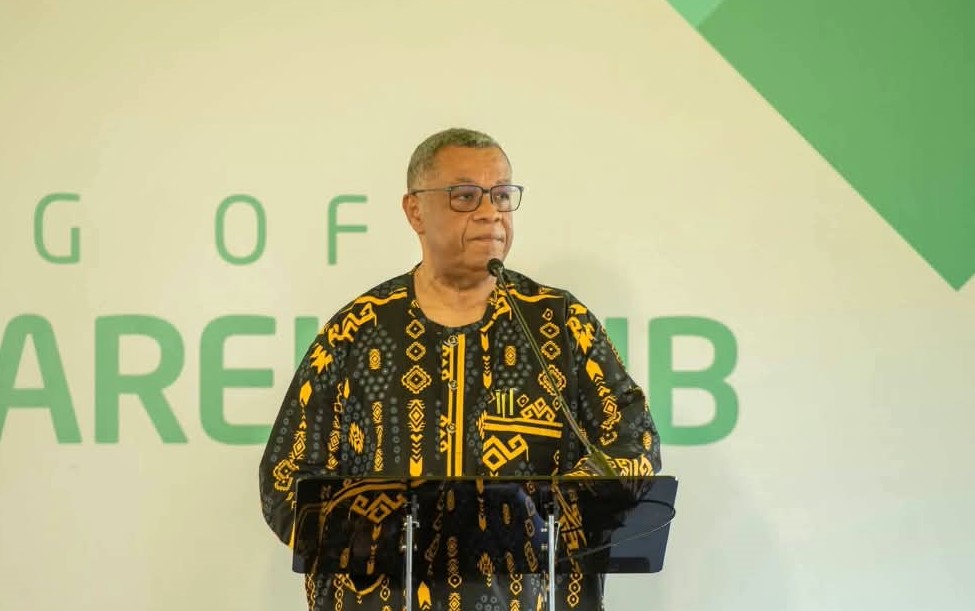
The 24-Hour Economy and Accelerated Export Development Secretariat has announced plans to establish a major light industrial and agro-processing park in Savelugu in the Northern Region.
The Northshore Light Industrial Park will be anchored around the Northshore Apparel garment factory, which was commissioned in Savelugu by President John Dramani Mahama.
Presidential Advisor on the 24-Hour Economy, Mr Augustus Goosie Tanoh, who announced this during the commissioning of the factory, said the Secretariat had begun the necessary processes towards establishing the industrial park.
He said the project was being prepared in partnership with the Ghana Infrastructure Investment Fund (GIIF) and the promoters of Northshore Apparel.
Mr Tanoh explained that the Savelugu industrial park forms part of a broader economic corridor being developed under the 24-Hour Economy Programme to link agriculture, manufacturing and export logistics.
He disclosed that the 24-Hour Economy Secretariat, in collaboration with the Ghana Airports Company, had demarcated about 150 acres of land at the Tamale International Airport for an air cargo hub.
According to him, the facility will enable vegetables, fruits, shea and other high-value products from northern Ghana to be transported directly to international markets.
Under the 24-Hour Economy Participatory Land Access Model (PLAM), Mr Tanoh said about 120,000 hectares of land along the White Volta had also been secured for an agricultural corridor covering Singa and Daboya in the Kumbungu and North Gonja districts.
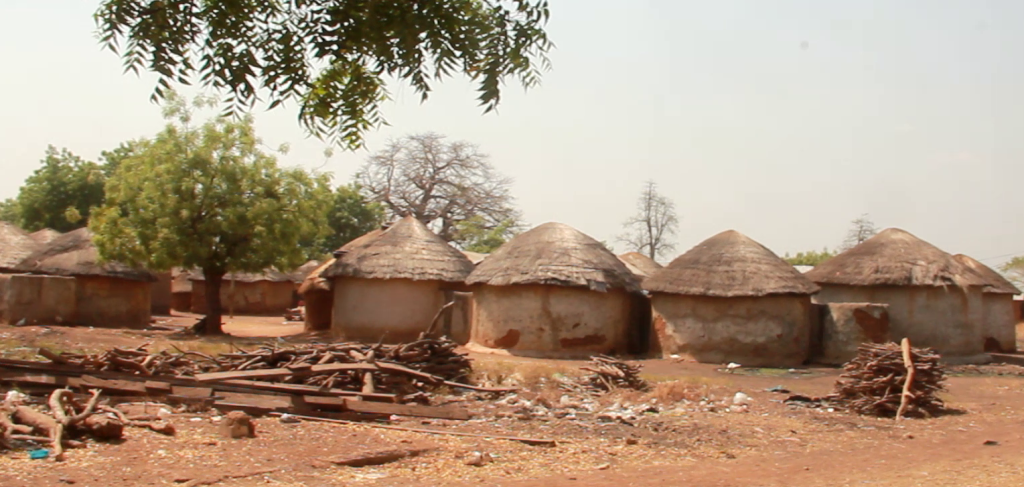
Singa community
He said the corridor would support commercial-scale cultivation of vegetables, cereals, oilseeds and cut flowers to supply industries and export markets.
Mr Tanoh further disclosed that the 24-Hour Economy Secretariat and the Ghana EXIM Bank had signed a 277-million-dollar agreement for an integrated poultry industry, which forms the first phase of the 24-Hour National Poultry Transformation Programme.
He said the farms at Singa, factories at Savelugu and Daboya, and export logistics facilities at Tamale were not separate projects but components of one integrated production system.

“They are part of a single production system: the economic corridor the 24-Hour Economy Programme is building to integrate and unify our national economy into one ecosystem to drive productivity, enhance production, create jobs and deliver inclusive growth.”
Northshore Apparel to operate three shifts
Mr Tanoh commended Northshore Apparel for including persons with disabilities in its workforce, describing the move as a commendable example for other businesses to emulate.
He also praised the company for establishing a clinic and a crèche alongside its production facilities.
According to him, Northshore Apparel is in the process of transitioning from a two-shift to a three-shift working system, which he said demonstrates the practical implementation of the 24-Hour Economy policy.
Mr Tanoh noted that Ghana’s industrial development had historically been concentrated in the southern part of the country, with roads, ports and logistics systems largely designed to transport raw commodities from the forest and mining belts to the coast for export.
He said the establishment of Northshore Apparel in Savelugu demonstrated that export-oriented manufacturing could thrive in northern Ghana and create opportunities for young people to find productive employment within their communities.
Focus on value addition
Mr Tanoh said the 24-Hour Economy and Accelerated Export Development Secretariat was established to transform the structure of Ghana’s economy by shifting the country from the export of raw materials to the production of finished goods for both domestic and international markets.
He said the programme was targeting an increase in the contribution of manufacturing to national output from about 10 percent to 20 percent over the next few years.
The programme, he added, was also targeting a reduction in the national unemployment rate to below five percent by 2034 through accelerated industrialisation and job creation.
He said these objectives would be achieved through investments such as Northshore Apparel and other initiatives under the 24-Hour Economy Programme, Feed Ghana and the Big Push.
Textile sector prioritized
Mr Tanoh said textiles and garments were among the key value chains prioritized under the 24-Hour Economy Programme because of their labor-intensive nature and their capacity to create jobs for young people and women.
He said Ghana was well positioned to develop the full value chain of the textile and apparel industry, particularly because cotton was cultivated in northern Ghana and extensively across the ECOWAS subregion.
He said the priority was now to connect farmers to ginneries, fabric processors, sewing lines, logistics providers and exporters to create a competitive textile and garment ecosystem.
This, he said, would enable garments produced in Savelugu to reach markets in Accra, Abidjan, Lagos and the wider African Continental Free Trade Area (AfCFTA) market, as well as markets covered by Ghana’s preferential trade arrangements with the European Union, the United Kingdom and China.
Mr Tanoh also expressed hope that the African Growth and Opportunity Act (AGOA), which provides preferential access to the United States market, would be renewed beyond its current term to create additional opportunities for Northshore Apparel and other Ghanaian manufacturers.
Industrialisation to drive infrastructure demand
Mr Tanoh said the establishment of factories such as Northshore Apparel would create demand for critical infrastructure, including electricity, water, roads, warehouses and logistics facilities.
He said such investments would also create demand for skilled labour and provide training institutions with real industrial clients to help shape relevant skills development.
The factory, he added, would create opportunities for local businesses involved in the supply of cotton, packaging materials, catering, transportation and other services.
Mr Tanoh said the success of Northshore Apparel would ultimately be measured by the number of young people employed, women earning stable incomes, local businesses securing supply contracts and farmers gaining access to reliable markets.
He said the expansion of industrial opportunities in the north could also help reduce rural-urban migration and irregular migration among young people seeking employment opportunities elsewhere.
Chiefs’ contribution
Mr Tanoh commended the Paramount Chief of the Savelugu Traditional Area, Naa Bapre Yoo-Naa Abdulai Yakubu Andani, for making available about 1,000 acres of land adjacent to Northshore Apparel for the development of the proposed Northshore Light Industrial Park.
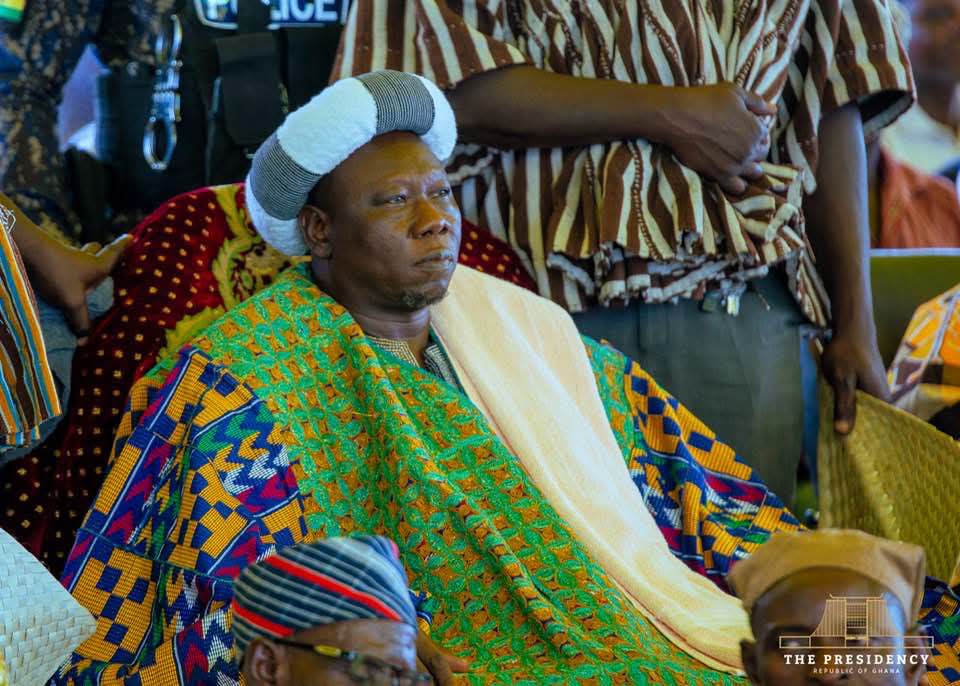
Yoo Naa Abdlai Andani, Chief of Savelugu
He said the initiative demonstrated how traditional authorities, government policy and private capital could work together to drive industrialization, investment, job creation and inclusive economic growth.
Mr Tanoh said the government remained committed to creating the conditions necessary for private-sector investment to expand production, increase exports and create sustainable jobs across the country.
