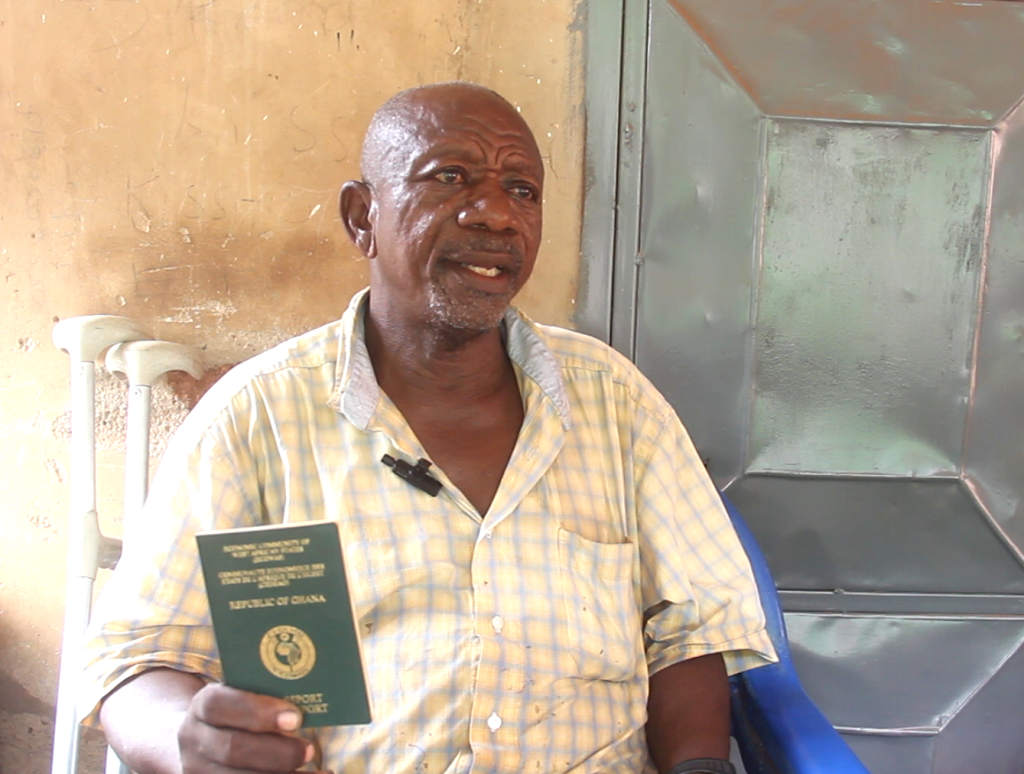


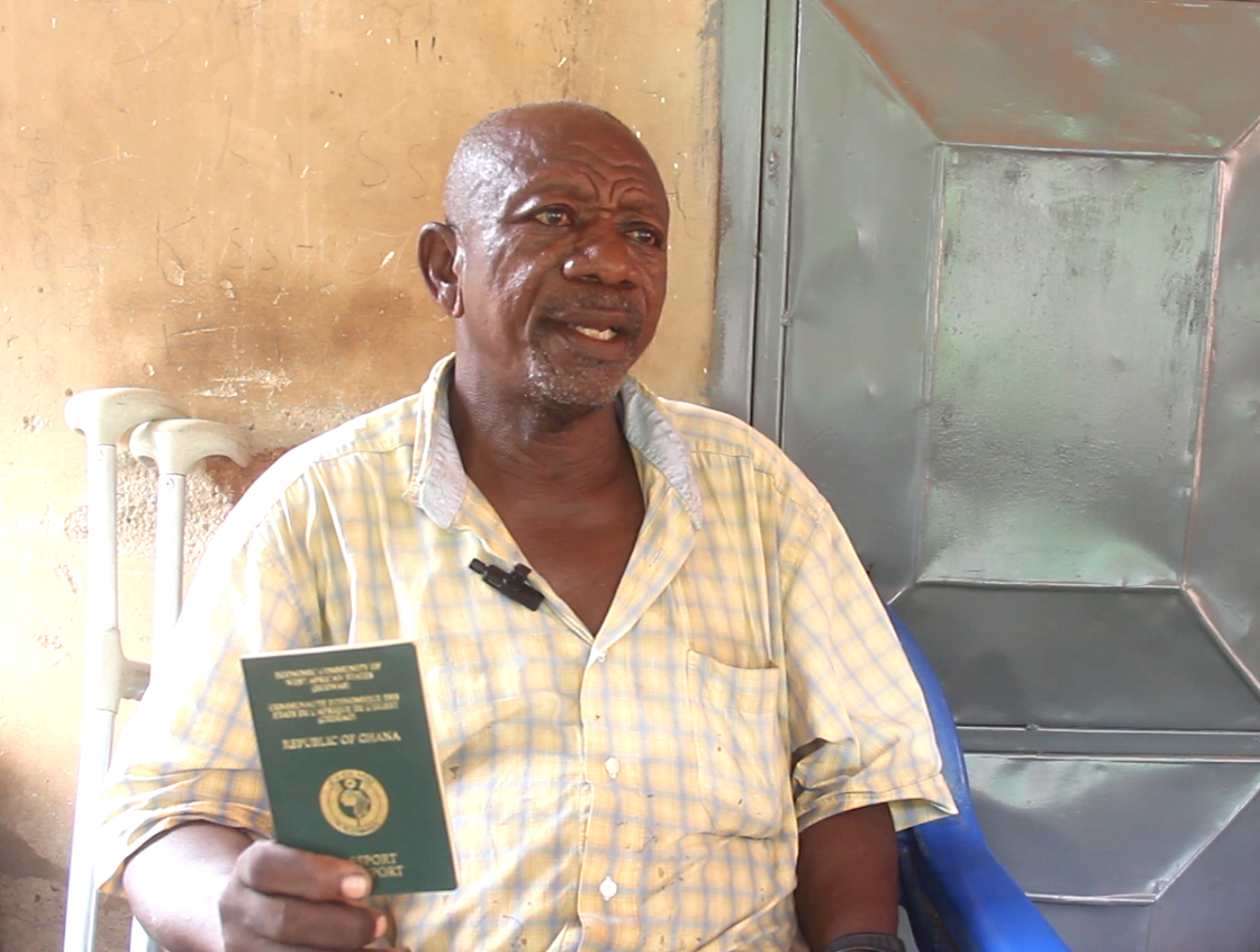
A Ghanaian returnee who endured years of hardship, detention and a life-threatening road accident while travelling across West Africa in search of better opportunities has urged young people to obtain valid travel documents and reliable information before leaving the country.
Mohammed Bawah, popularly known as Shoe Doctor, says his experience in Togo, Benin Republic and Nigeria taught him painful lessons about the dangers of irregular migration and the importance of understanding the laws of destination countries.
The 50-year-old father of five recounted how a series of personal misfortunes and economic difficulties pushed him to leave Ghana in search of opportunities, only to return home with an amputated leg and the burden of rebuilding his life.
Mr Bawah was managing a pharmacy at Nyankpala in the Tolon District in 1987 when armed robbers attacked and ransacked the facility.
He said subsequent family tragedies, including the death of his elder brother following his trip to Tamale for his daughter’s naming ceremony, compounded his difficulties and affected his mental well-being.
Seeking a fresh start, he travelled to Togo to join a relative who had promised to help him secure employment. However, the promised job did not materialize.
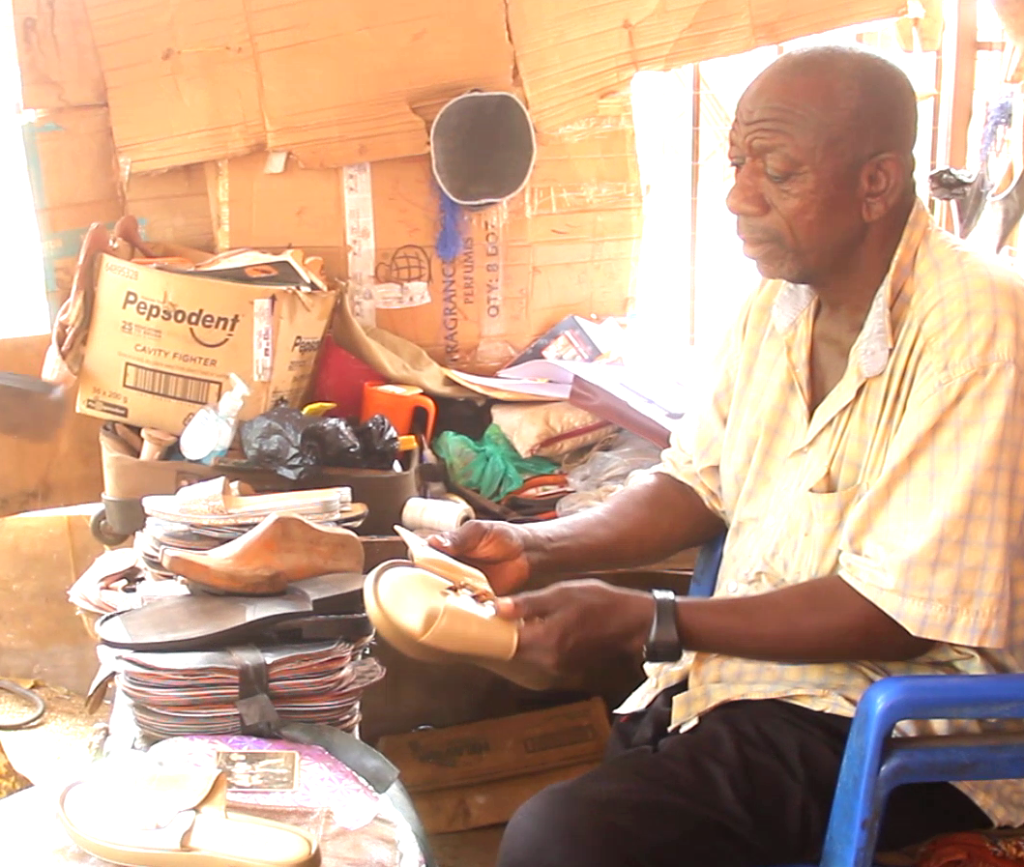
He later met a shoemaker, Adam Musah, who introduced him to the trade, allowing him to earn a living despite not having a Togolese residence permit, known as a carte de séjour.
Mr Bawah said he travelled through Sankasi and Dapaong to Kara in northern Togo, where he spent about three years before moving to Lomé.
His troubles, however, were far from over.
While polishing customers’ shoes at a lorry station in Lomé one morning, he said, Togolese military police, known as the Gendarmerie, raided the station and arrested him alongside other Ghanaians.
According to him, the detainees were suspected of being spies following political tensions and fears of a coup in the country. He said Ghanaians engaged in menial jobs were also viewed with suspicion.
Mr Bawah recounted that he and eight other Ghanaians spent about ten days in detention before he was released on bail of 5,000 CFA francs, despite not knowing the specific offence he had allegedly committed.
He said his savings and assistance from a Togolese friend enabled him to pay the bail.
Mr Bawah said his experience in Togo made him increasingly concerned about the vulnerability of undocumented migrants, who may face detention and other difficulties when they encounter immigration or security officials.
He said the uncertainty surrounding his situation eventually influenced his decision to leave Togo for Benin with a Nigerian shoemaker, Malam Hamdu.
The two men travelled through parts of Benin while repairing shoes to raise money for their journey.
Mr Bawah said they walked from Djougou towards Parakou, covering a considerable distance before continuing by vehicle into Nigeria through Kwara State.
They later travelled through parts of Oyo State before reaching Lagos, where they intended to purchase shoemaking tools to support their business.
However, life in Lagos he explained proved difficult, forcing them to return to Ibadan and other locations in search of a livelihood.
According to him, their lack of proper immigration documents exposed them to further difficulties with Nigerian security officials.
Mr Bawah’s ordeal took a devastating turn when a vehicle in which he was travelling suffered a front-tyre blowout on a dangerous, rocky road.
He said the accident killed several passengers, while he survived with severe injuries.
He later found himself in a bush near Parakou, where Good Samaritans took him to a hospital for treatment.
According to him, a doctor who attended to him recommended that he return to Ghana for further medical care because of the financial challenges associated with his treatment in Benin.
The journey home, he said, was filled with grief and uncertainty as he wondered how he would face his wife, children and mother after travelling in search of a better life.
Mr Bawah said returning home without the financial success he had hoped for was emotionally devastating, particularly because he feared disappointing his family.
He also recounted how rumours circulated in Tamale after his return in 1996, with some people allegedly suggesting that he had engaged in criminal activities abroad.
He said the rumours and the stigma surrounding his condition made him reluctant to involve family members in his struggles.
Mr Bawah subsequently sought medical assistance at the Bolgatanga Government Hospital before being referred to Korle Bu Teaching Hospital in Accra for further treatment.
At the time, he said, he approached the Ministry responsible for employment and social welfare, where a civil servant directed him to the hospital’s social welfare unit.
He recalled that the assistance provided through the social welfare system helped cover some of his medical expenses and medication, which he could not afford.
Mr Bawah said he spent 34 days within the hospital premises before he was admitted to the orthopaedic unit.
He was later attended to by a doctor he identified as Dr Lanyon, who explained that surgery was necessary but carried a high risk of amputation.
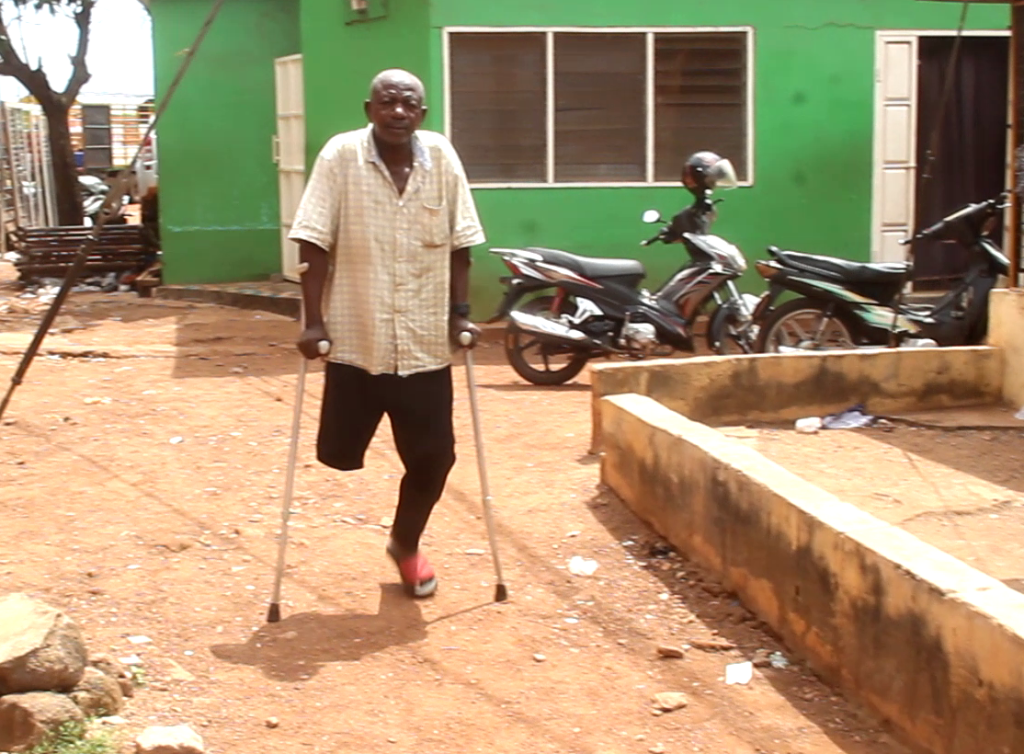
According to Mr Bawah, he was taken to the operating theatre on three occasions without undergoing surgery before the doctor eventually warned that further delays could cost him his life.
He said he ultimately consented to the operation, despite the possibility of losing his leg.
Mr Bawah attributed the loss of his leg to the devastating accident that changed the course of his life.
Despite his challenges, Mr Bawah said he has continued to seek opportunities to rebuild his life through entrepreneurship.
He disclosed that he had applied to the National Apprenticeship Programme through the National Youth Authority office at the Youth Home in Tamale, hoping to receive assistance to expand his shoemaking business.
He said he had yet to receive a response to his application, despite giving a copy to someone who promised to follow up with the programme’s national coordinator in Accra.
Explaining why young people leave their communities and travel abroad, Mr Bawah cited economic hardship, family and societal expectations, and peer pressure as some of the factors that influence migration decisions.
He, however, cautioned prospective migrants against relying on unverified information or individuals who promise jobs and opportunities without providing credible evidence.
He appealed to young people to secure valid travel documents, understand the immigration laws of their intended destinations and verify employment opportunities before embarking on their journeys.
Mr Bawah said he would never again travel abroad without the appropriate documentation, having experienced the consequences of irregular migration firsthand.
He also recounted a subsequent journey to Kara in Togo, which he said he undertook on his motorbike after obtaining a passport. He described the reaction of friends who were surprised to see him return, despite his physical condition.
Mr Bawah also appealed to the public to stop stigmatising returnees, arguing that migrants should not be judged solely by the circumstances under which they travelled or returned home.
Speaking in an interview with Zaa News, he said migration is often driven by the desire to improve one’s circumstances and should be understood within the broader context of economic and social pressures.
He maintained that migrants who obey the laws of their host countries and seek legitimate employment deserve to have their rights and dignity respected.
Mr Bawah further argued that migrants contribute to the economies of both their destination countries and Ghana through their labour, taxes and remittances.
He said he was not ashamed of being a returnee and remained determined to use the skills and experience he had acquired abroad to build a sustainable livelihood in Ghana.
“I need support to expand my shoemaking business because that is my only source of income to take care of my five children and my wife,” Mr Bawah appealed.
He called on the government, development organisations and the public to support returnees who are seeking to rebuild their lives and contribute to national development.
The International Organization for Migration has supported voluntary return and reintegration initiatives for Ghanaian migrants. However, Mr Bawah says he is yet to receive the assistance he needs to expand his business and support his family.
His story serves as a reminder of the risks associated with travelling without proper documentation and reliable information, and the need for stronger support systems to help returnees reintegrate into society.
For Mr Bawah, the message to young people is clear: seek opportunities abroad, if necessary, but do so with proper documents, adequate preparation and a clear understanding of the risks involved.