

From the Military Uniform to the Ancient Tolon Skin: The Journey, Service and Legacy of Tolon-Naa Major (Rtd.) Sulemana Abubakari

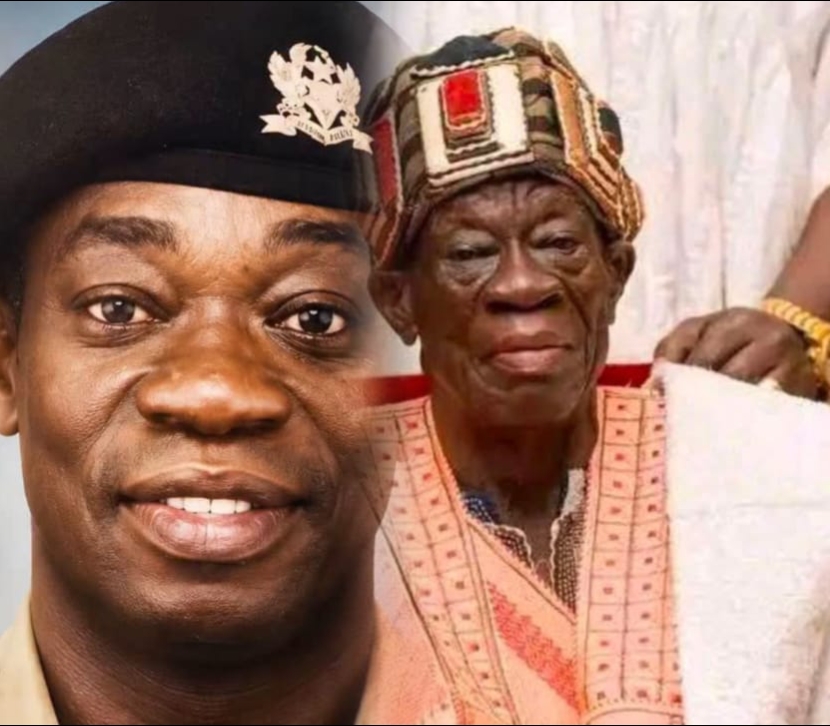
Tamale N/R — Once again, the ancient kingdom of Dagbon has been summoned into mourning as Naa-Yab Tolon-Naa Sulemana Abubakari, Major (Rtd.), Paramount Chief of the Tolon Traditional Area, joins his ancestors.
At a time when Dagbon is still grieving the passing of the King, Ya-Na Abubakari Mahama II, the departure of the Tolon-Naa has cast another long shadow over the kingdom, leaving chiefs, elders and subjects to contemplate the fragility of life and the enduring strength of tradition.
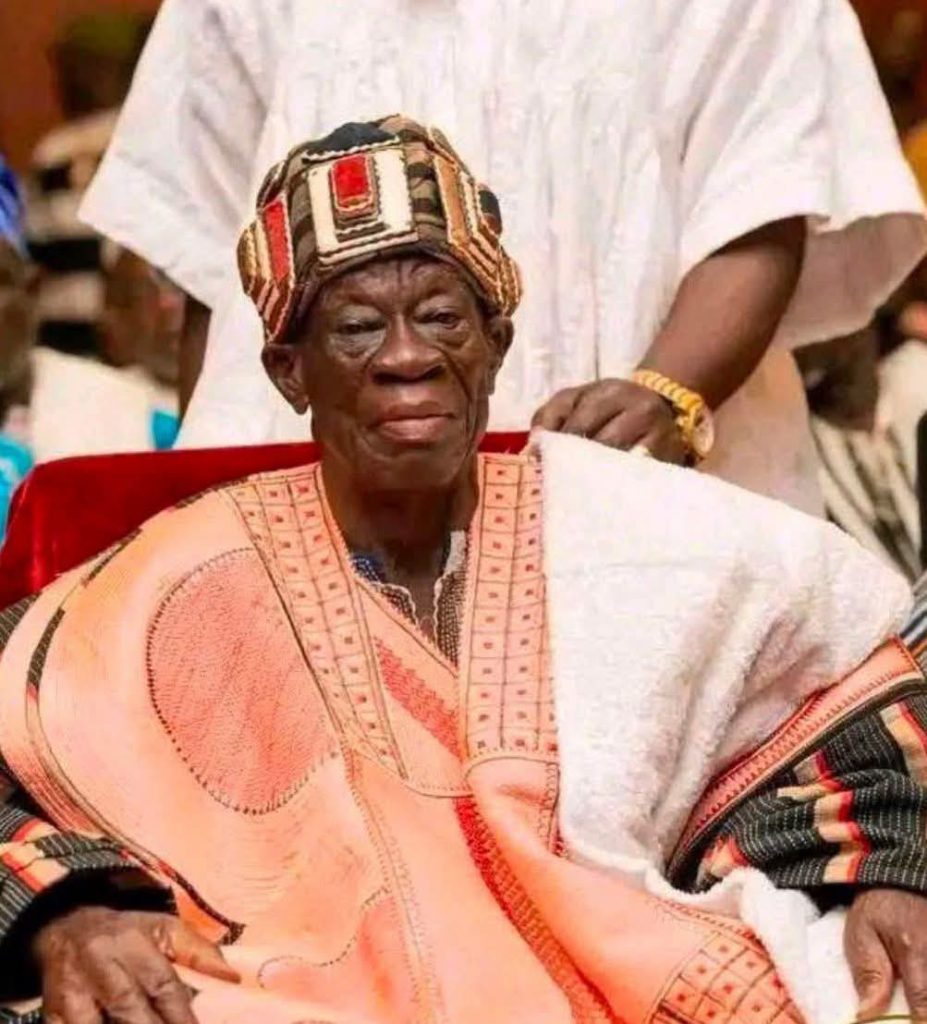
Born in 1943 at Tali, Naa-Yab Tolon-Naa Abubakari was the first son of the late Tolon Naa Alhassan Sulemana. His early years were shaped by education and service, taking him from his primary education to Kalpohini Middle School in Tamale and later T.I. Ahmadiyya Secondary School, where he completed his studies in 1961.
In 1963, destiny took him into the Ghana Armed Forces. He rose through the military ranks and retired as a Major, having also served as an escort officer to Ghana’s first President, Dr Kwame Nkrumah.Yet, beyond the military uniform, another destiny awaited him, the ancient Tolon skin.
Following the death of his father, he became Regent of Tolon in 2001 and served for approximately 18 years. Then, in 2019, after completing his father’s funeral rites, he was enskinned as the substantive Tolon-Naa by the late Ya- Na Abubakari Mahama II.
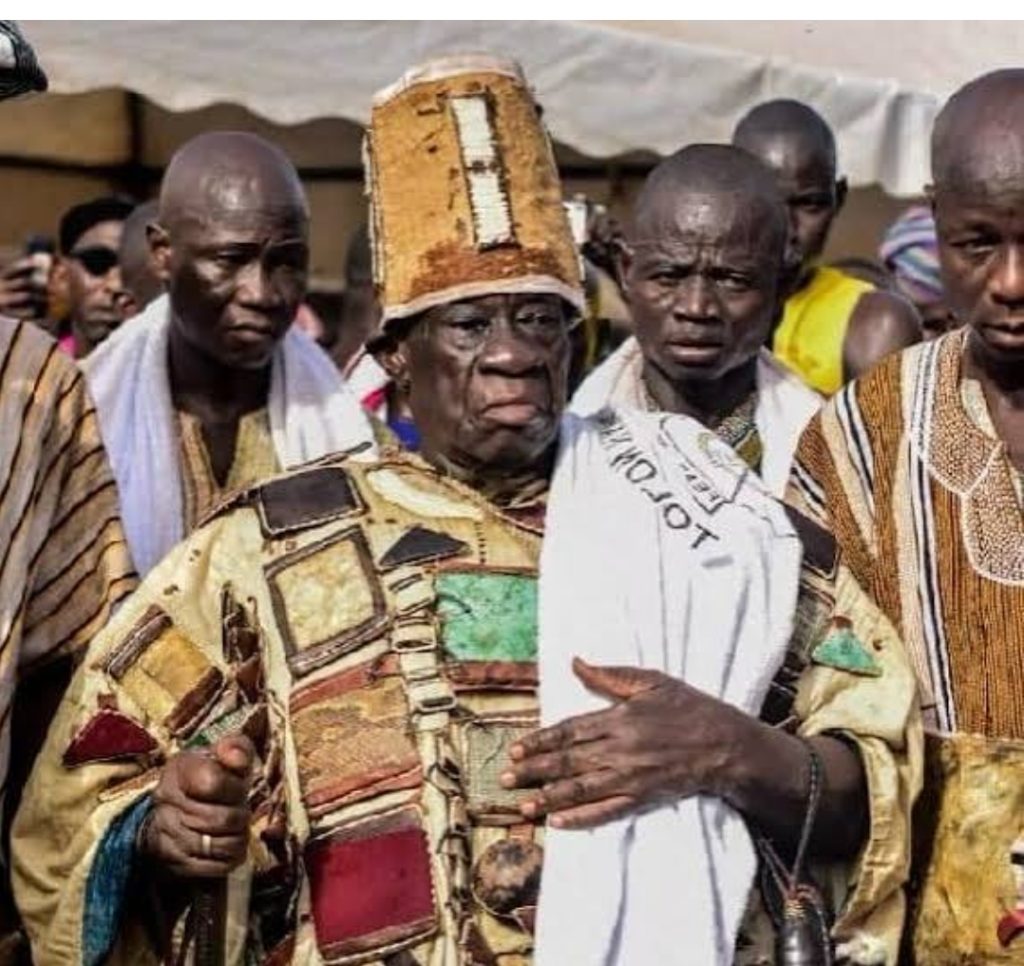
In Dagbon’s traditional order, the Tolon skin is not an ordinary skin. It carries a deep military heritage and has historically been associated with the defence of the Dagbon Kingdom and the mobilisation of warriors.
It was therefore fitting that the man who once wore the uniform of the Ghana Armed Forces would later occupy a skin so deeply connected with the traditional defence of Dagbon.
In the language and memory of Dagbon, he was more than Major Sulemana Abubakari. He was Tolon-Naa Bukali—a name that carried the weight of bloodline, history and ancestral responsibility.
He was remembered in the traditional imagery of Dagbon as “Tɔbulan kpɛma,” the commander of the Dagbon army, and “Zandu’ kpandaalana,” the bearer of the ancient spear.
For in Dagbon, names are never merely names. They carry blood. They carry history. They carry the voices of ancestors and the responsibilities inherited by the living.
And behind the Tolon skin, lies a lineage whose story stretches deep into the ancestral memory of Tali and Tolon.
Among the names preserved in that oral history is Tali Naa Alaasani, whose own journey through the traditional skins became part of the enduring genealogy of the Tolon royal line.The ancestral story tells of a chief whose destiny seemed repeatedly interrupted by vacant skins and changing circumstances, yet whose lineage ultimately continued through his descendants.
And perhaps, that is the enduring lesson of Dagbon’s traditional history: a man may leave the skin, but the skin does not leave history.
Through the generations, the spear of the Tolon lineage continued to pass from one custodian to another until it reached the hands of Naa-Yab Tolon-Naa Sulemana Abubakari.
As a traditional ruler, he carried that inheritance with the discipline of a soldier and the solemn responsibility of a chief.
Throughout his reign, he was associated with the promotion of peace, unity, education and development, and his voice remained part of the continuing conversation about rebuilding and strengthening Dagbon.
Today, however, that voice has fallen silent. The soldier has laid down his arms; the chief has left the palace; the ancient spear has fallen still. And because his passing comes so soon after that of the Ya-Na, Dagbon’s grief is understandably deeper—a kingdom mourning not only individuals, but custodians of institutions that connect the present to generations past.
As the people of Tolon prepare to bid their chief farewell, the final rites will be guided by Islamic faith and the customs and traditions of Dagbon, with the appropriate traditional authorities expected to announce the funeral arrangements.
But beyond the rites and ceremonies, what will remain is memory—the memory of a soldier, the memory of a chief, and the memory of a man remembered for fairness, justice, truth, integrity and credible leadership.
More significantly, he will be remembered in the popular description of him as a chief who “did not sell the land”—a reputation that, in the traditional context of Dagbon, speaks profoundly about the values of custodianship, integrity and responsibility. His reign has ended, but his story has not; his voice has gone silent, but the history of the Tolon skin will continue to speak; his journey has ended, but the footprints he left on the sands of Tolon will remain.
May Allah receive him with mercy, may his ancestors welcome him with honour, and may his soul find eternal rest.
“Bɛ Kaanila doo tuma, pa ni doo yuma” — To wit, a man’s worth is measured not by the length of his life, but by the legacy he leaves behind. Such was Naa-Yab Tolon-Naa, Major (Rtd) Sulemana Abubakari—a man whose years may have come to an end, but whose service, dignity and legacy shall continue to speak across generations.
By: Issifu Alidu Laa-Bandow// zaaghana.com// Social Media Analyst
